How to Teach Theme Without Getting One-Word Answers
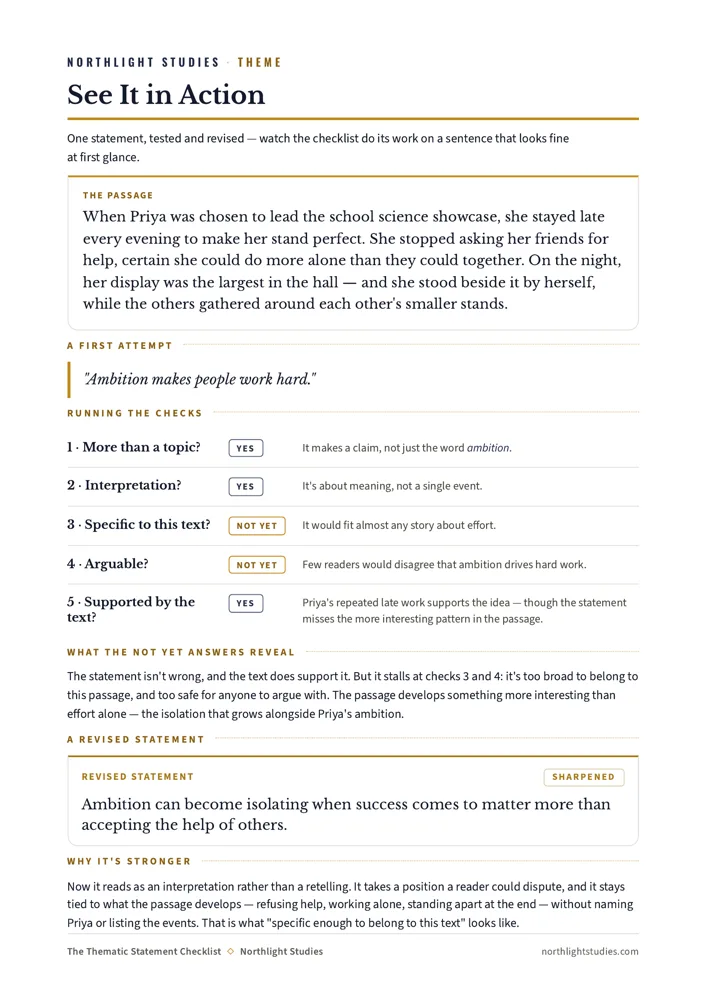
Students name a topic and stop there? Here's how to teach the step from a topic to a defensible thematic statement you can test against the text.
ReadA secondary English teaching publication
Classroom-ready thinking on literary analysis, the craft of teaching, and staying a learner yourself, written by a practising secondary English teacher.
Three strands, one idea: teaching that takes thinking seriously.
Literary analysis, close reading, novel study, and classroom method.
Explore Teaching practiceThe thinking behind good teaching: task design, scaffolding, judgement.
ExploreOn teachers staying learners themselves. First essays in development.
Free Resource
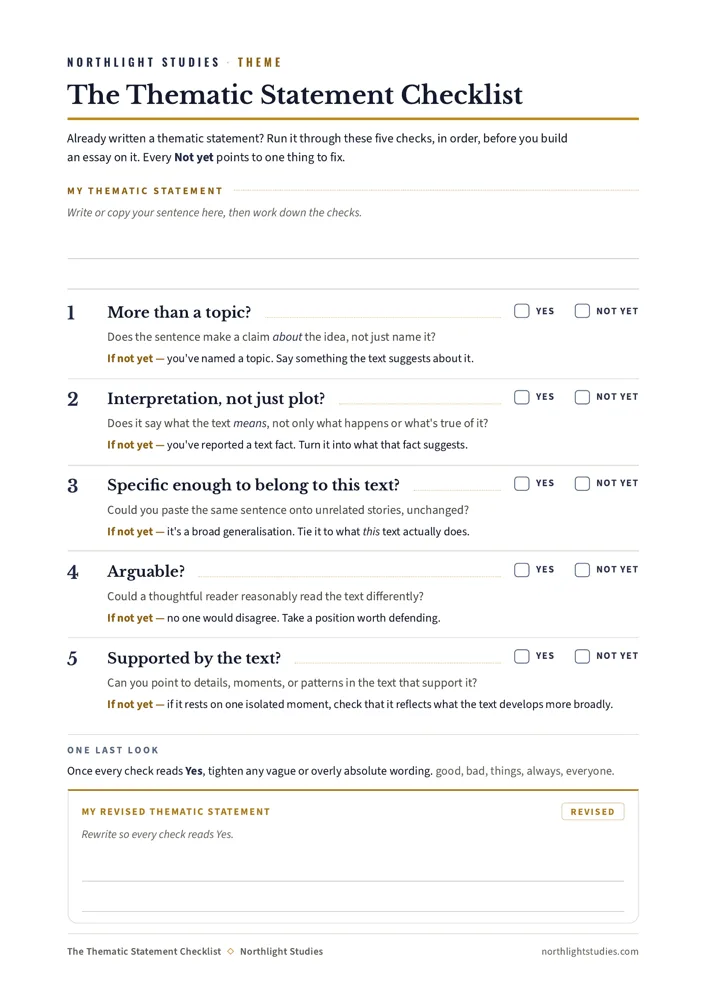
A print-ready checklist students can use to test and revise a thematic statement independently. It checks whether the statement moves beyond topic and plot, stays arguable, and is genuinely supported by the text.
View the checklistIdeas and classroom thinking from Northlight Studies.
Students name a topic and stop there? Here's how to teach the step from a topic to a defensible thematic statement you can test against the text.
ReadTopic, theme, and thematic statement get blurred together. Here's a clear classroom convention for what each means, and a quick check for telling them apart.
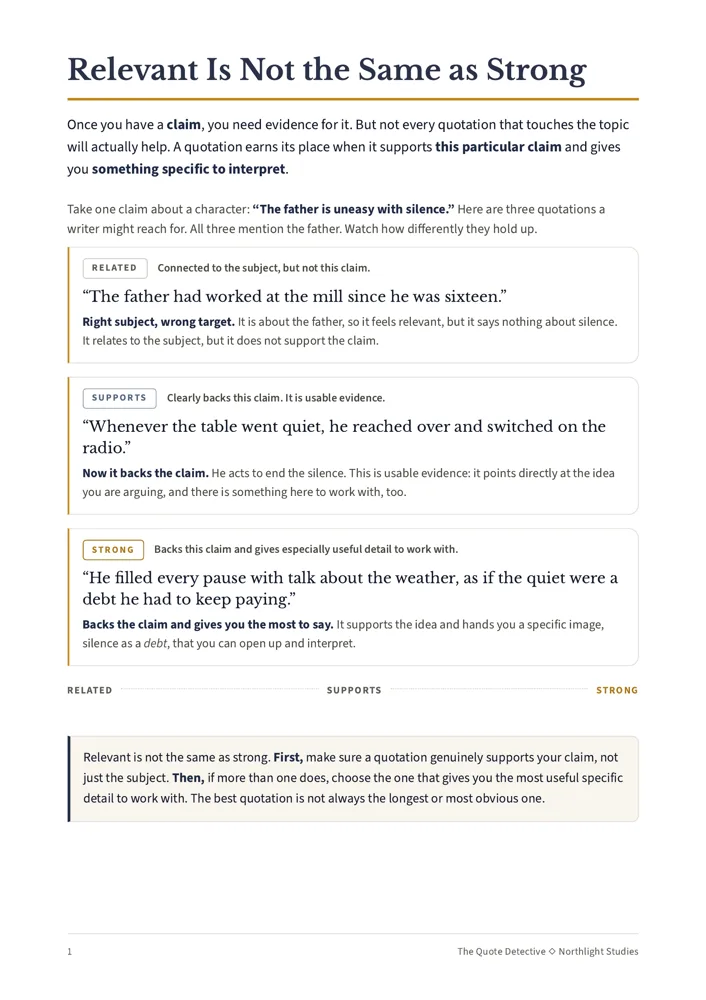
Read"Find a quote" can turn evidence selection into retrieval. Here's why I stopped treating finding as the whole task and made room for student judgement.
ReadNorthlight Studies resources
Literary-skills Minis and full novel study guides: teacher-made, classroom-ready.